Earth Day 2026: 6 Practical Sustainability Tips for the Workplace

The challenges facing our planet can feel overwhelming. Climate change, resource scarcity, and rising waste levels are often framed as problems too big for individuals to influence. But real change is built through everyday actions, repeated at scale.

At Recorra, we focus on practical steps that reduce waste at source, improve recycling quality, and keep valuable materials in circulation. This Earth Day, we are spotlighting small, achievable choices that deliver meaningful impact when done consistently.

1. Segregate More, Contaminate Less

Correct waste segregation is one of the most effective ways to improve recycling and reduce overall waste. The more clearly materials are separated, the less likely contamination is to send entire loads to disposal.

This is especially important for batteries and vapes, which should never go into general waste or mixed recycling due to the serious fire risk they pose to vehicles, facilities, and people. When disposed of correctly, their materials can be safely recovered rather than causing damage or danger.

Segregation also matters for commonly misdisposed items like coffee grounds and paper towels. When placed in the correct streams, these materials can be recycled through specialist processes. When mixed or contaminated, they often cannot.

At Recorra, we consistently see that clearer waste streams, better signage, and simple guidance lead to cleaner recycling, lower costs, and less waste sent for disposal.

2. Let Data Guide Decisions

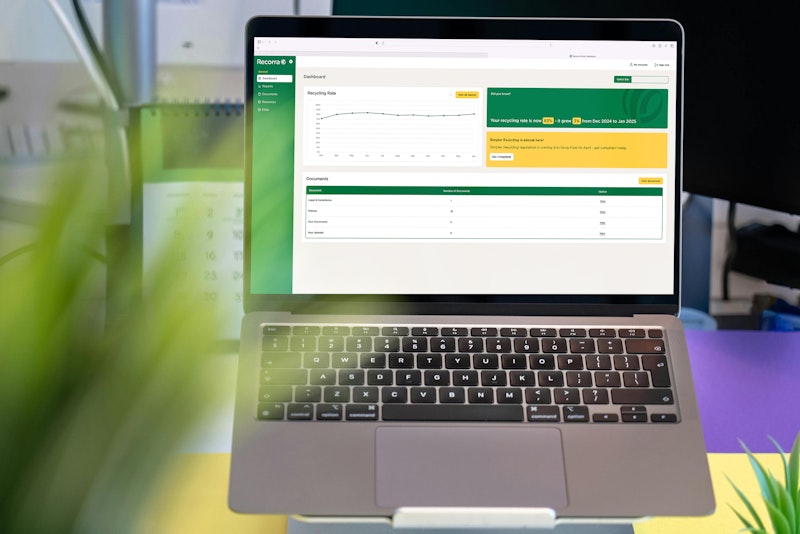
Waste reduction starts with understanding what is being thrown away, where, and why. Across workplaces, hospitality venues, and shared buildings, visibility is often the difference between ambition and measurable progress.

When waste streams are clearly defined and understood, businesses can reduce contamination, cut unnecessary waste, and take targeted action that delivers real impact. Data removes guesswork and supports smarter decisions, from improving segregation to preventing waste altogether.

The same principle applies at home. Noticing patterns in what you throw away is often enough to trigger better habits over time.

For Recorra customers, waste data can be easily accessed and understood through MyRecorra.

3. Recycle Your Food Waste

Food waste is one of the biggest and most avoidable contributors to climate change. The UK throws away around 9.5 million tonnes of food waste each year, generating approximately 5.5% of national greenhouse gas emissions.

Reducing food waste in the first place is always the priority. But when food waste is unavoidable, how it is managed matters.

When food waste is collected separately, it can be sent to anaerobic digestion, where it is turned into renewable energy and fertiliser. If all UK food waste were sent to anaerobic digestion, it could generate enough electricity to power 32,000 homes and heat 8,000 homes, while returning nutrients to the soil.

Using the food bin helps turn unavoidable waste into a valuable resource and supports a circular system.

4. Bring Your Own Cup

Single‑use packaging is one of the easiest waste streams to prevent entirely. In the UK, around 7 million disposable coffee cups are thrown away every day. While many people assume these can be recycled, most contain a plastic lining that is difficult to separate, and lids are often made from materials that are rarely recycled.

Bringing a reusable cup eliminates waste at source and reduces contamination. Many cafés now actively encourage this behaviour, with Pret a Manger offering 50p off every hot drink when customers bring their own cup.

It is a small habit, but one that clearly shows how preventing waste altogether is better than trying to manage it later.

5. Rethink What You Eat And Drink

What we eat also plays a role in our environmental footprint. Dietary choices account for around 66% of an individual’s water footprint, largely due to the resource intensity of animal agriculture. For example, producing a single 4‑ounce portion of chicken requires around 492 litres of water.

Even small changes add up. Swapping meat for plant‑based meals just one day a week can save the equivalent of 789 bathtubs of water per year.

This does not require a complete diet overhaul. Simple swaps like lentil bolognese, chickpea tuna mayo, or scrambled tofu make it easier to reduce impact without sacrificing flavour.

6. Make a Pledge

Systemic change starts with individual commitment. Rather than trying to do everything at once, choose one habit you can stick to.

That might mean using the right waste streams, disposing of batteries and vapes correctly, always using the food bin, or carrying a reusable cup. Small promises, consistently kept, add up.

When everyday actions are repeated across workplaces and communities, they become collective progress. Our power lies in what we do every day, and together, those choices can help build a lower‑waste future for our planet.