About The Client
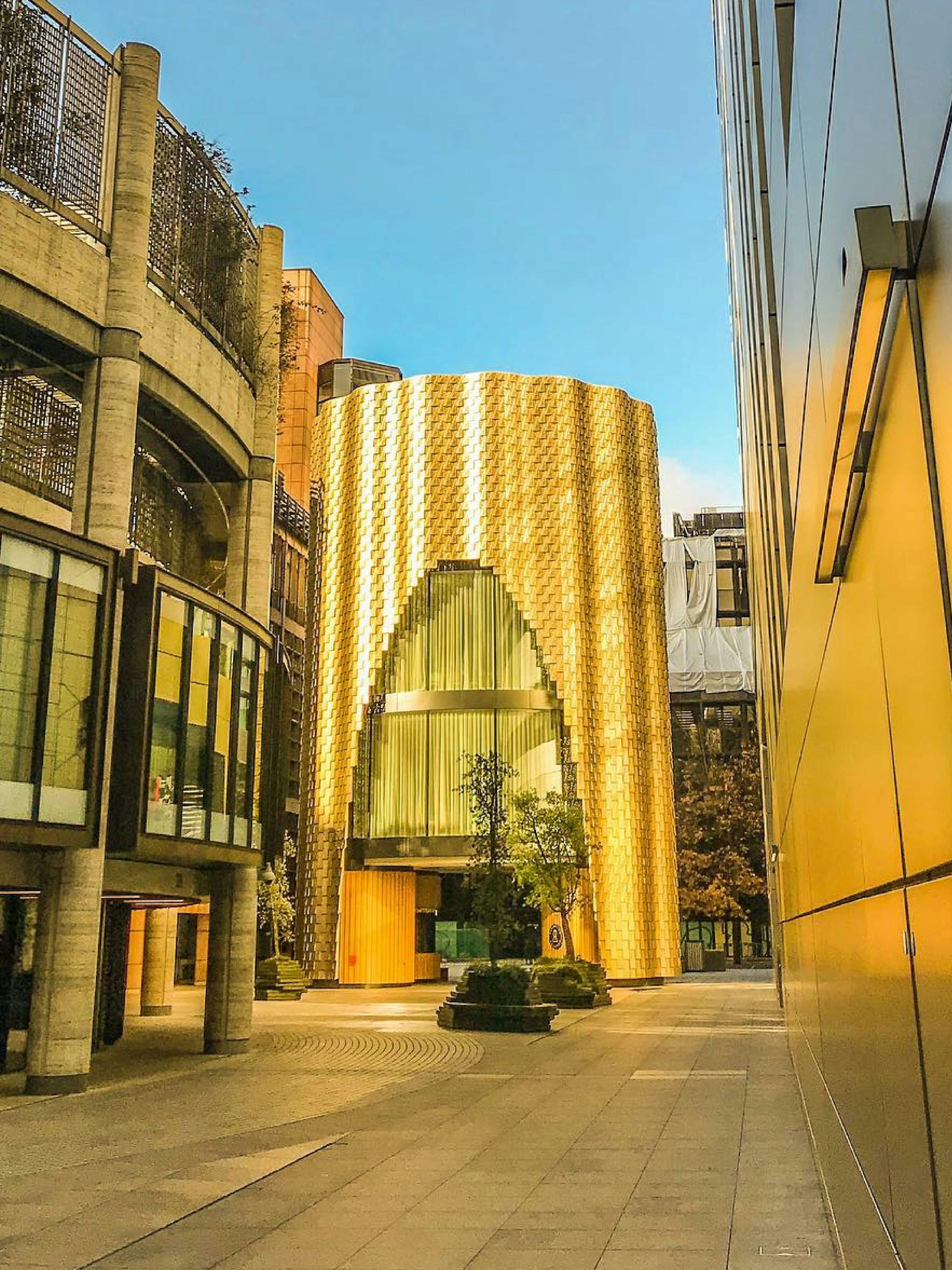
Broadgate is a 32-acre office-led campus located in the City of London, with excellent connectivity, next to Liverpool Street Station and the Elizabeth Line. Its proximity to Shoreditch attracts a breadth of customers from financial services, law firms, fintech, media and other growth sectors.
Broadgate is committed to making a positive difference to organisations, communities, and people. They are committed to achieving net zero across all buildings by 2030 and have definitive targets to minimise carbon emissions. Broadgate chose Recorra as their waste management partner due to our shared goal of achieving zero waste. The estate is always looking for new ways to manage waste, such as encouraging reusability which aligns well with Recorra’s own desire to promote reduction, reuse and recycling above all else.
Our Client's Challenge
Prior to working with Recorra, Broadgate struggled with collecting accurate waste data due to their waste infrastructure. Large compactors served multiple buildings and each building within the campus is occupied by two or more tenants. This was complicated further by the haphazard nature of the weighing scales which were different makes, models, and sizes. As a result, while Broadgate had accurate total waste volumes for each compactor, but it was difficult to estimate waste volumes for each individual occupier. The bin signage in the loading bays across site were also ineffective; the signage was overly text dominant which proved a struggle for staff for whom English was a second language. The text was also difficult to read.
Broadgate also faces significant challenges from waste contamination i.e. when the wrong items go in the wrong bins. Specifically, glass from retail occupiers was often mixed with plastic bags, tissue paper, and food. The bulk of contaminated glass occurs on Wednesday, Thursday, and Friday evenings.
Our Solution
To help Broadgate achieve its waste ambitions, Recorra have implemented the following waste and recycling services:
At the outset of our partnership in April, Recorra provided separate waste streams for mixed recycling, glass, food, cardboard, batteries & vapes, toners, furniture, hazardous waste, cans & plastics, paper, and fluorescent tubes.
Between April and August, Recorra introduced waste streams for coffee cups & grounds, cooking oils, and green waste.
Alongside these waste streams, Recorra also helps Broadgate collect old office furniture for reuse and ensure that documents are securely shredded to protect privacy.
Services Provided
Batteries & Vapes
Can & Plastics
Cardboard

Coffee Cups

Coffee Grounds

Compostable Packaging

Confidential Shredding

Cooking Oil

Fluorescent Tubes
Food

Furniture
Glass

Green Waste
Hazardous Waste

Electrical Equipment
Mixed Recycling

Paper

Secure Workwear

Textiles & Clothing
Toners
Operational Improvements
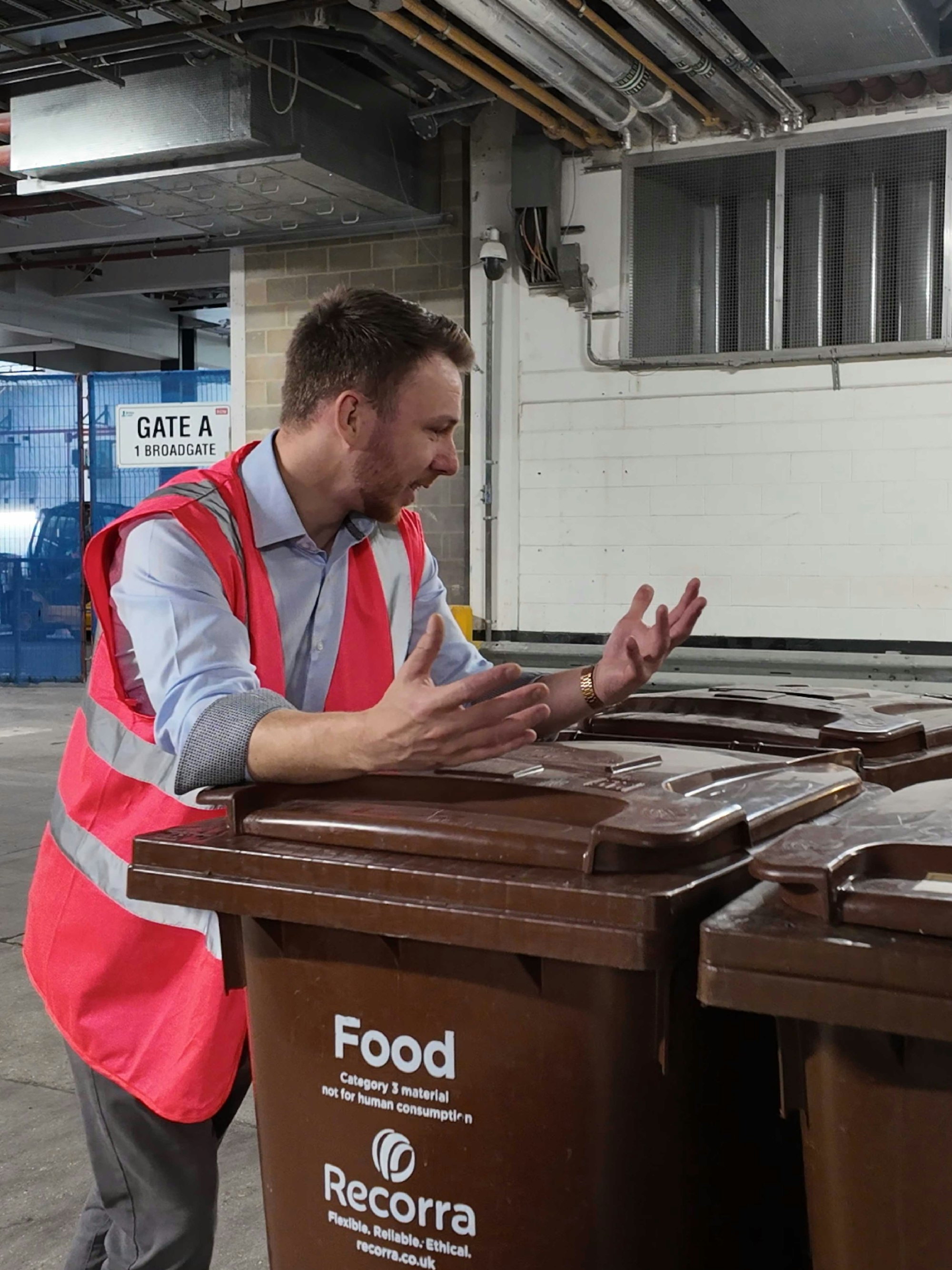
At the outset of the contract with Broadgate, our first order of business was to improve the estate’s ‘binfrastructure’. Within six months we provided each building with their own weighing machines, upgrading and replacing necessary units, meaning they all function on the same model and data reporting platform. This has allowed us to provide occupiers with their recycling data separate from the building as a whole. Both these measures make waste reporting more accurate for all parties involved.
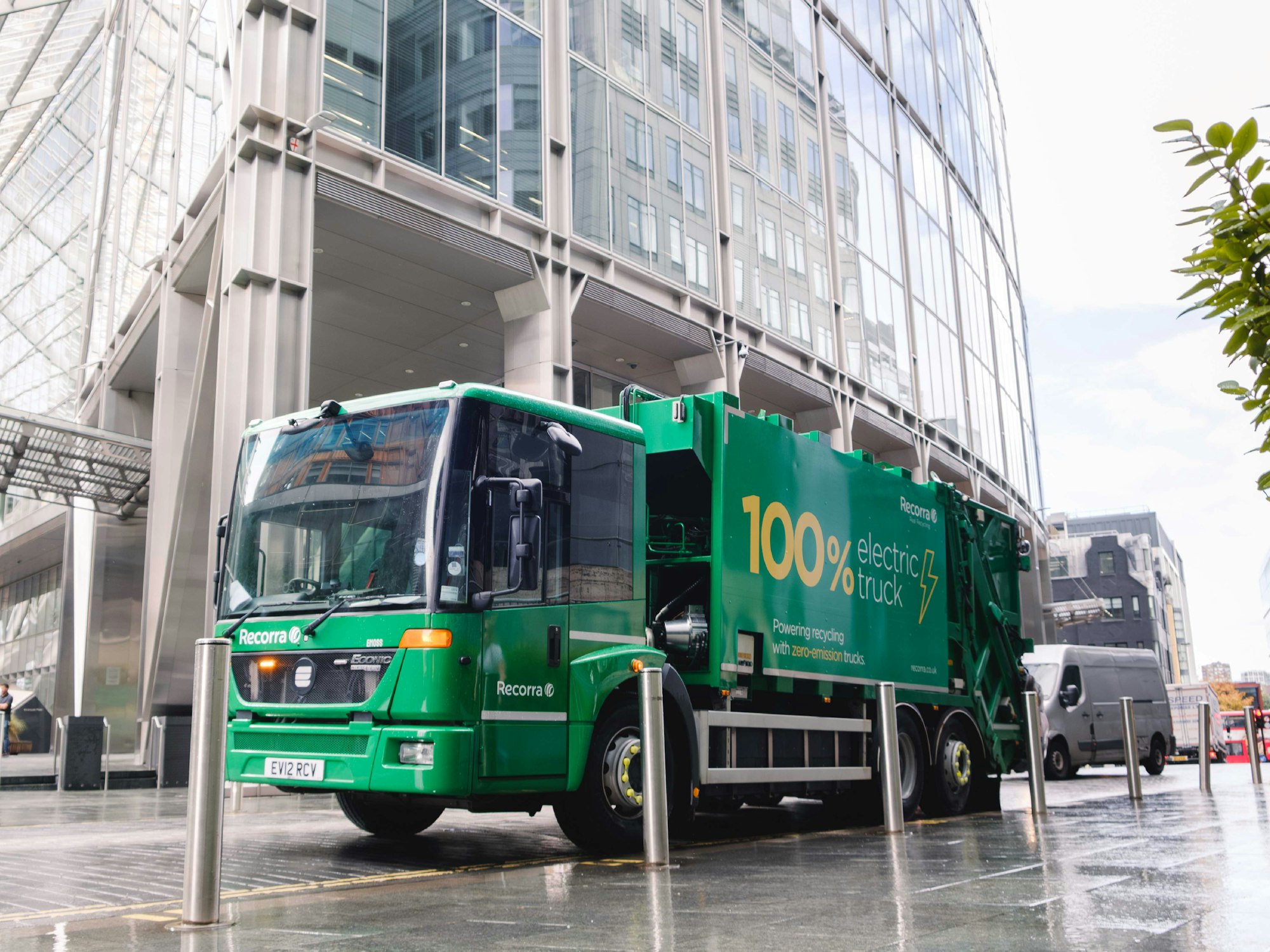
Another improvement we made to the ‘binfrastructure’ was introducing bin presses to each loading bay. By compacting waste into the bins, we reduce the volume, therefore, the number of collections equating to fewer vehicle movements. Reducing vehicle movements does not just have the benefit of reducing carbon emissions but also noise pollution. By choosing Recorra for its waste management, Broadgate also benefits from our fleet of electric vehicles which is essential for carbon reduction and reducing Broadgate’s Scope 3 emissions.
Education
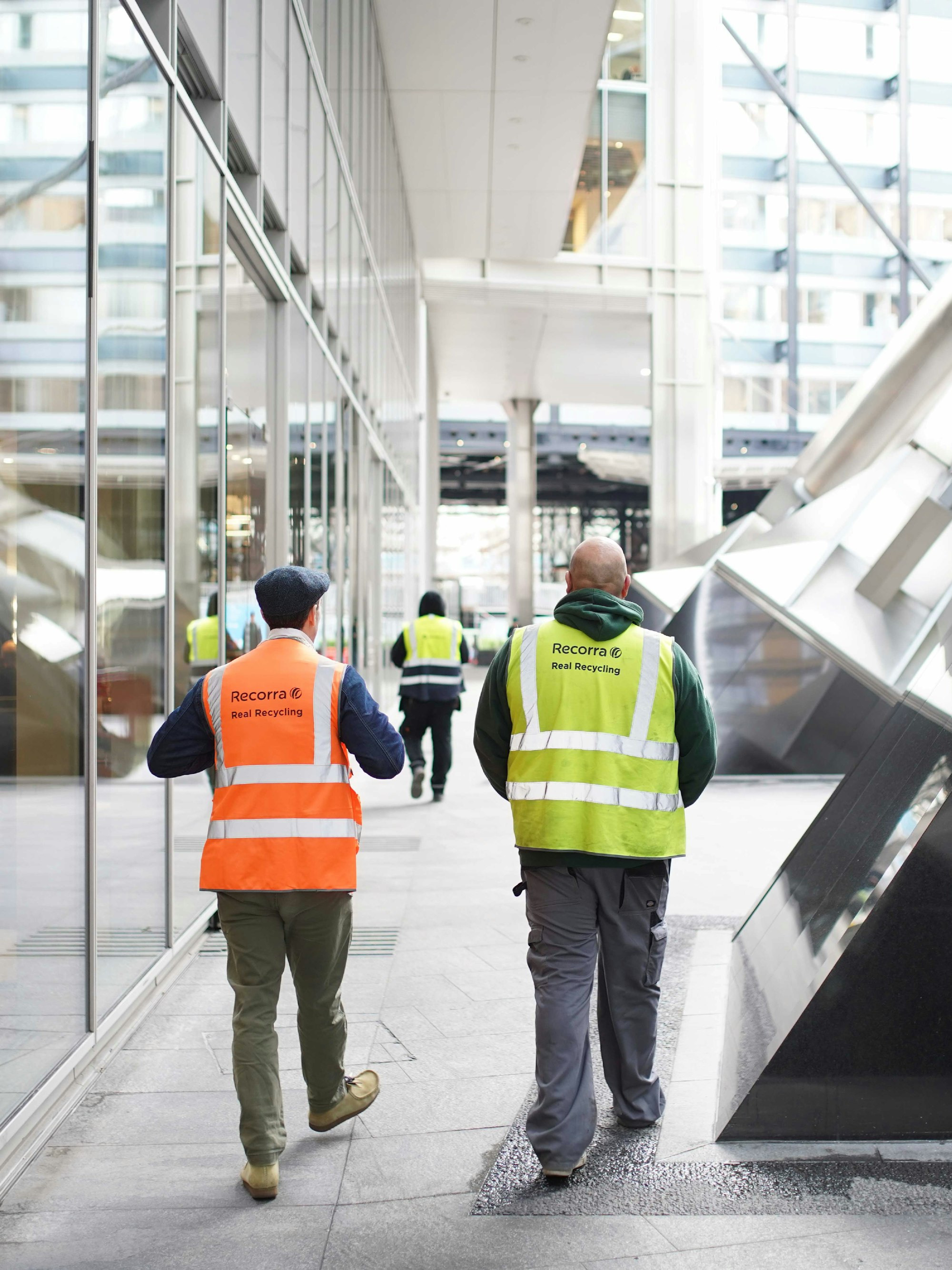
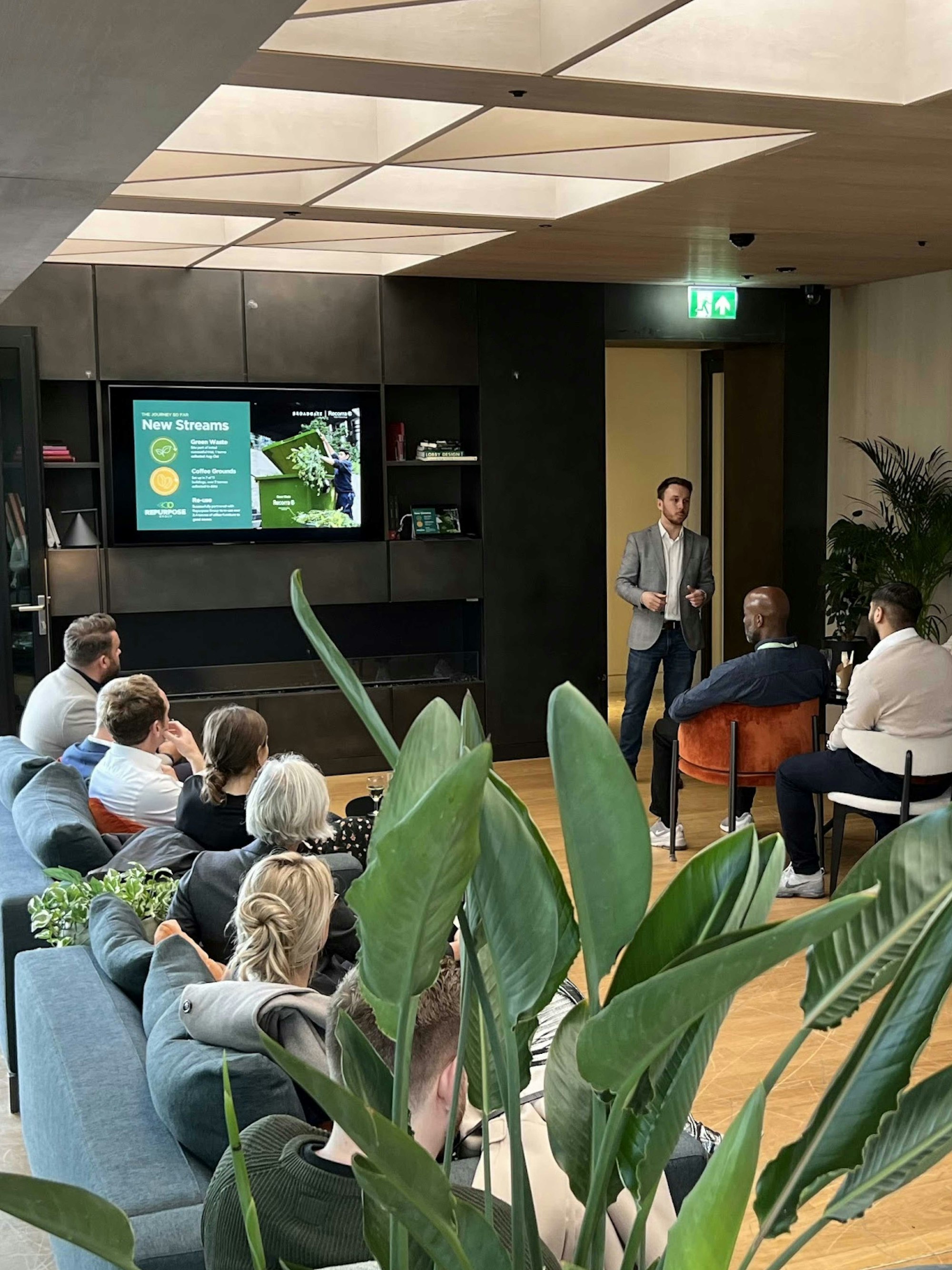
Recorra has a dedicated environmental consultancy team which exists to support our partners in developing and implementing waste strategies that have a truly positive impact. Nick, a member of the consultancy team, works at Broadgate two days per week. At the start of our partnership with Broadgate, we hit the ground running by ensuring that everyone who encountered waste fully understood and appreciates their role in the process. Within 6 months we have trained over half of Broadgate’s cleaning staff and held waste reviews for 15% of tenants.
Educating tenants and staff through floor walks, lunch & learns, and back of house trainings has helped ensure a smooth transition and maintain recycling rates. Since beginning the contract, floor walks have been completed for 22% of Broadgate’s occupiers and the campus has received over 150 hours of educational consultancy.
Recorra and Broadgate have also partnered together on several social value events; we have hosted 4 groups of school children (over 100 children in total) during a day visit to Broadgate to educate on the importance of recycling. As the school children were between 5-11 years old, we kept them engaged by creating a running-recycling game. The kids were tasked with organising themselves into 4 groups rolling a 6-sided die with different waste types on the faces and running to the relevant bin.
During Broadgate’s Social Mobility Business Partnership week, we hosted 30 A-level students on a half-day’s work experience. Many of them did not realise that careers within sustainability existed and broadened their horizons to the range of environmental careers available.
Tracking Contamination
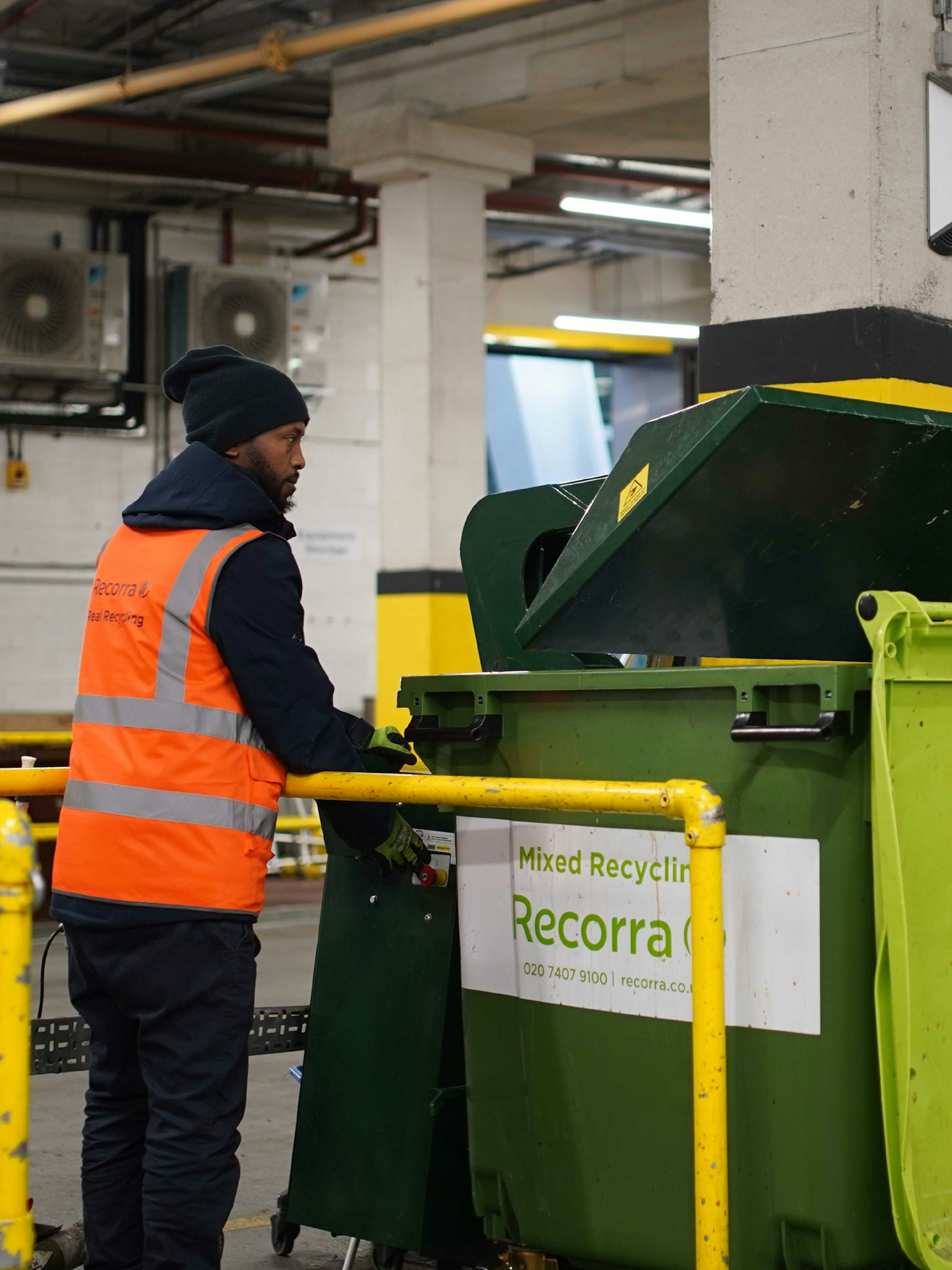
We also undertook waste composition analyses which is a process of physically separating, weighing, and categorising waste. This allows Broadgate to better identify sources and waste contamination trends. Through this Recorra and Broadgate discovered that the worst contamination occurs on Wednesday, Thursday, and Friday evenings.
As well as waste, we ensured staff had training in equipment use, manual handling, and Broadgate’s environment and energy policy such as ways to avoid unnecessary energy use. The cleaning and waste teams more than rose to the occasion, and the team was proud of their embracing of new practices. Broadgate is a hot bed of talent with many team members being promoted on site and to other roles with Recorra. One waste operative has been hired as an account manager whilst another staff member was recruited as a graphic designer.
After the operational strategy was reviewed and running smoothly, we moved on improving waste signage, replacing the text heavy signs with brand new bespoke signage with Broadgate branding. This new signage utilises more images and less text to make it easier for staff to identify the correct bin to place waste in. We also made the signs colour coded and matched these colours with the appropriate sack and bins. By acting as a visual trigger for segregation, colour coding aids in transforming the act of segregating waste from something Broadgate staff need to actively remember to do into a habit.
We also implemented niche waste streams including coffee grounds and coffee cups. Prior to contracting Recorra, Broadgate’s green waste was sent to landfill. We worked in partnership with the on-site landscaping and estate management teams to develop London’s first commercial green waste composting service. We also provide a true circular solution as the compost can then be bought back to use on site.
Achievements
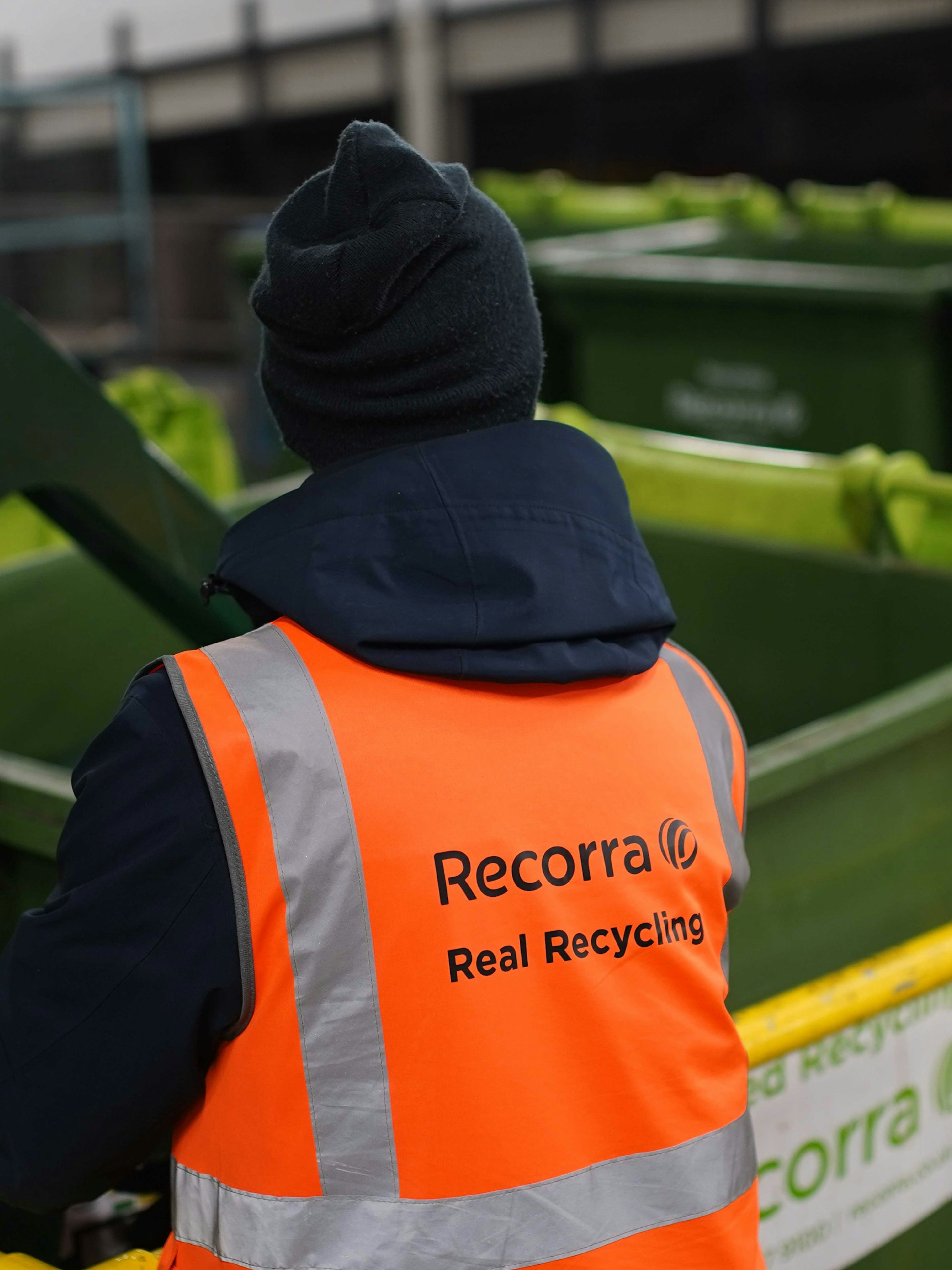
Recorra processes 300-360 tonnes of waste a month from Broadgate and with our help, Broadgate has achieved a tremendous recycling rate of 81%.
Now collecting 19 different streams, our emphasis on training has paid off; in six months we have contacted 63% of floors, held 15 waste reviews, and trained 99% of cleaners. While it is common for recycling rates to fall when switching contracts, Recorra was able to prevent that drop due to the excellence of the team on the ground whowere receptive of the changes and implemented them with enthusiasm.
Since partnering with Recorra, Broadgate has saved 2.4 tons of furniture from going to waste. When tenants left Broadgate, the old furniture was given to local communities and schools to be reused. Broadgate’s sustainability efforts have saved 5,139 trees through their paper recycling, and through food waste collections have donated 1,164meals to the food charity Plan Zheroes.
The campus’ dedication to recycling their electronic waste has also enable Recorra to secure 7 tutoring sessions to The Children’s Literacy Charity.
By recycling 1,598,385kg of material and 39,591kg of paper, Broadgate has prevented 1,502,996kg of carbon dioxide entering the atmosphere.
Here’s what the client had to say
Recorra has made a significant contribution to strengthening Broadgate’s environmental performance. Their systematic enhancements to our waste infrastructure, improved data integrity, and the introduction of innovative recycling and circular solutions have enabled meaningful reductions in emissions and substantial improvements in recycling outcomes across the Estate.
Equally, their structured programme of training and stakeholder engagement has supported more consistent and responsible resource management among our teams and customers. This partnership is helping Broadgate deliver measurable environmental and social value while advancing our long term commitment to a circular operating model and our pathway to net zero.
British Land - Broadgate’s Estate Director
What's next
As we continue to the future, Broadgate desires to integrate circularity into their operations. Broadgate aims to purchase Recorra’s office supplies with many products made from the recycled materials we collect. The campus would also like to enhance its health and safety modules to better protect workers from workplace hazards. Broadgateand Recorra intend to reach a scenario where current staff can train new employees in best waste practices.
In addition to adding a waste stream for branded and non-branded textiles, including Broadgate uniforms, Recorra and Broadgate would like to expand engagement initiatives and introduce new innovations and leading processes. With so much already achieved, there is a long way to go, but what is certain is the future of the partnership is bright.