Our Client’s Challenge
Air pollution is a serious issue for both human health and the environment. That’s why Recorra is working to reduce emissions through fleet electrification and the use of Hydrotreated Vegetable Oil (HVO), a lower-emission alternative to diesel.
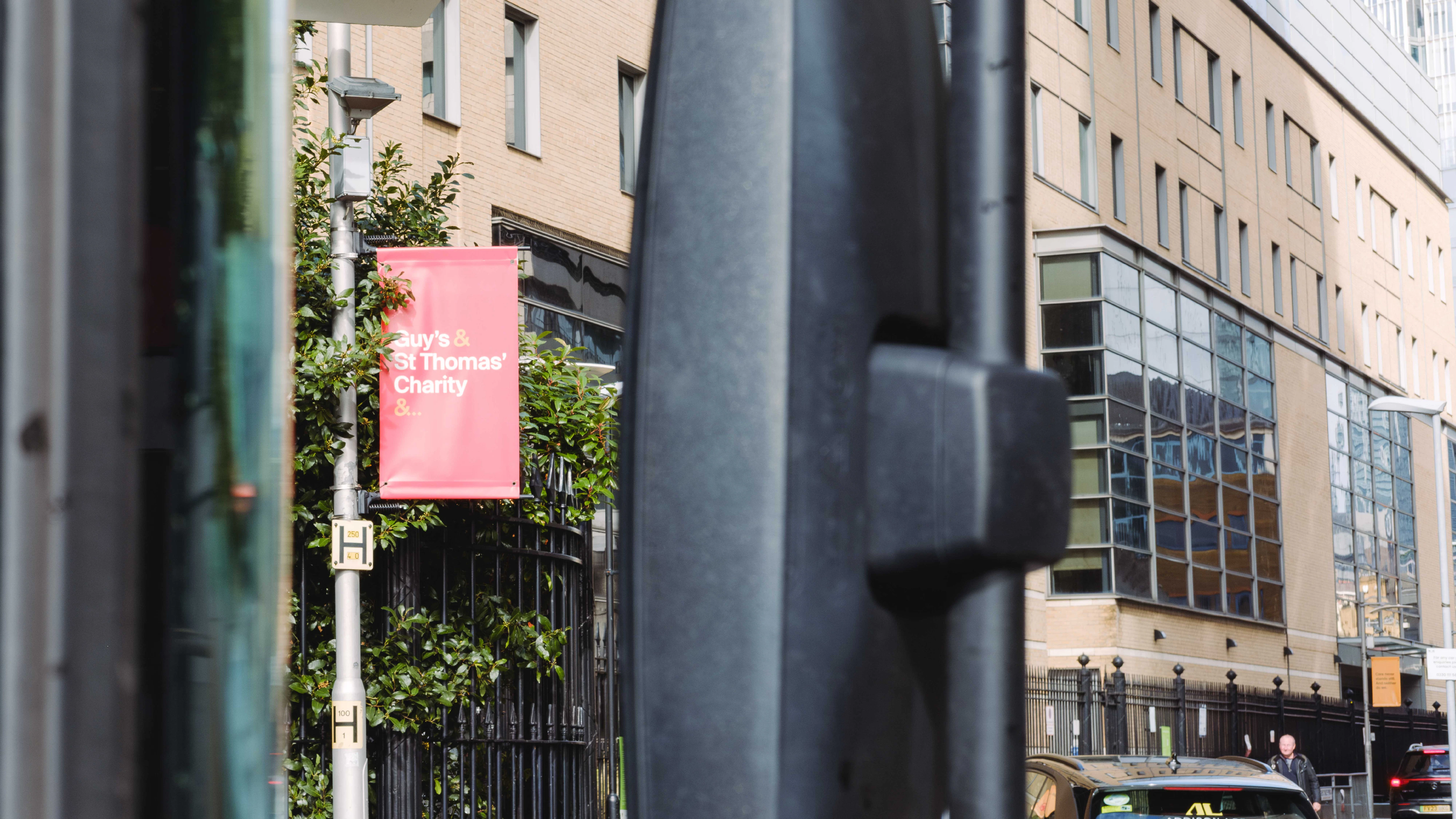
Recorra is prioritising these efforts where cleaner air can have the greatest impact, including hospitals such as Guy’s and St Thomas’ NHS Foundation Trust.
In this blog, we’ll explore how Recorra and Guy’s and St Thomas’ worked together to measure and reduce air pollution in a busy hospital environment, demonstrating how targeted operational changes can deliver measurable improvements in air quality.
Why Does Air Pollution Matter?
Air pollution poses a significant risk to both human health and the environment, and these risks are particularly acute in a hospital setting.
Nitrogen oxides (NOx), produced primarily by combustion engines, are known to cause inflammation in the respiratory system, and can worsen existing conditions such as asthma and chronic respiratory disease.
For hospital patients, many of whom are already vulnerable, improving air quality can support recovery and reduce the likelihood of complications.
As one of London’s largest hospital trusts, Guy’s and St Thomas’ is acutely aware of these impacts; background emissions in the London Borough of Southwark measure well above the World Health Organisation’s recommended benchmark.
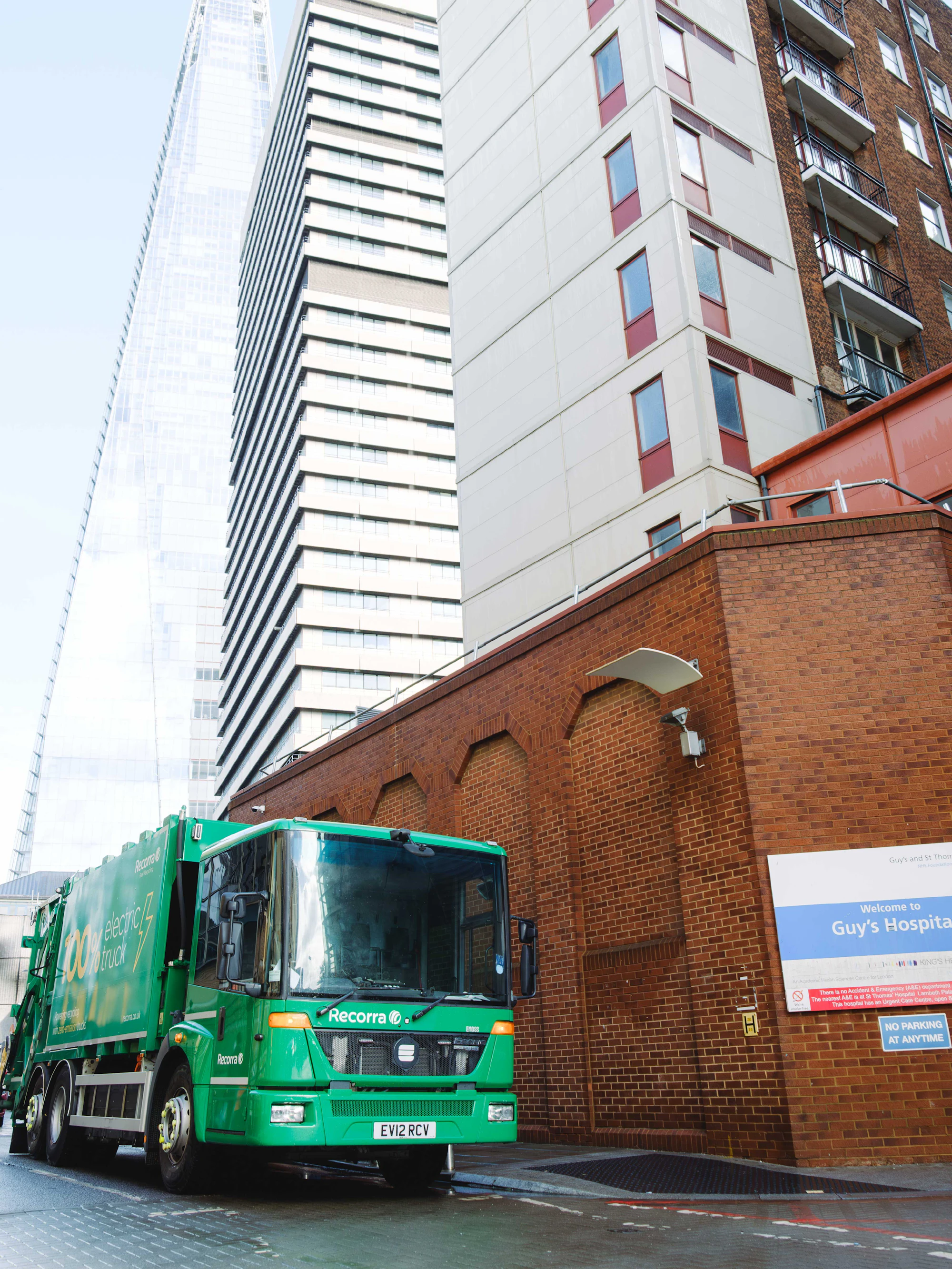
Within this wider context, Guy’s and St Thomas’ identified its loading bays as an area of concern, as exposure to high concentrations of pollution elevate the risk of health problems. These enclosed, high-activity spaces experience frequent vehicle movements and periods of vehicle idling. This both produces concentrated pollution spikes which are damaging to directly inhale, and creates conditions where pollution can build up and affect air quality inside the hospital.
Services Provided





Our Approach
Since 2022, Recorra and Guy’s and St Thomas’ have worked together to reduce the environmental impact of operations.
Initially focused on improving Guy’s and St Thomas’ waste and resource management, the partnership expanded in 2025 to address air quality and the health and environmental impacts of air pollution. Recorra sought to lead by example in monitoring and improving air quality, demonstrating how cross-sector collaboration can drive meaningful change.
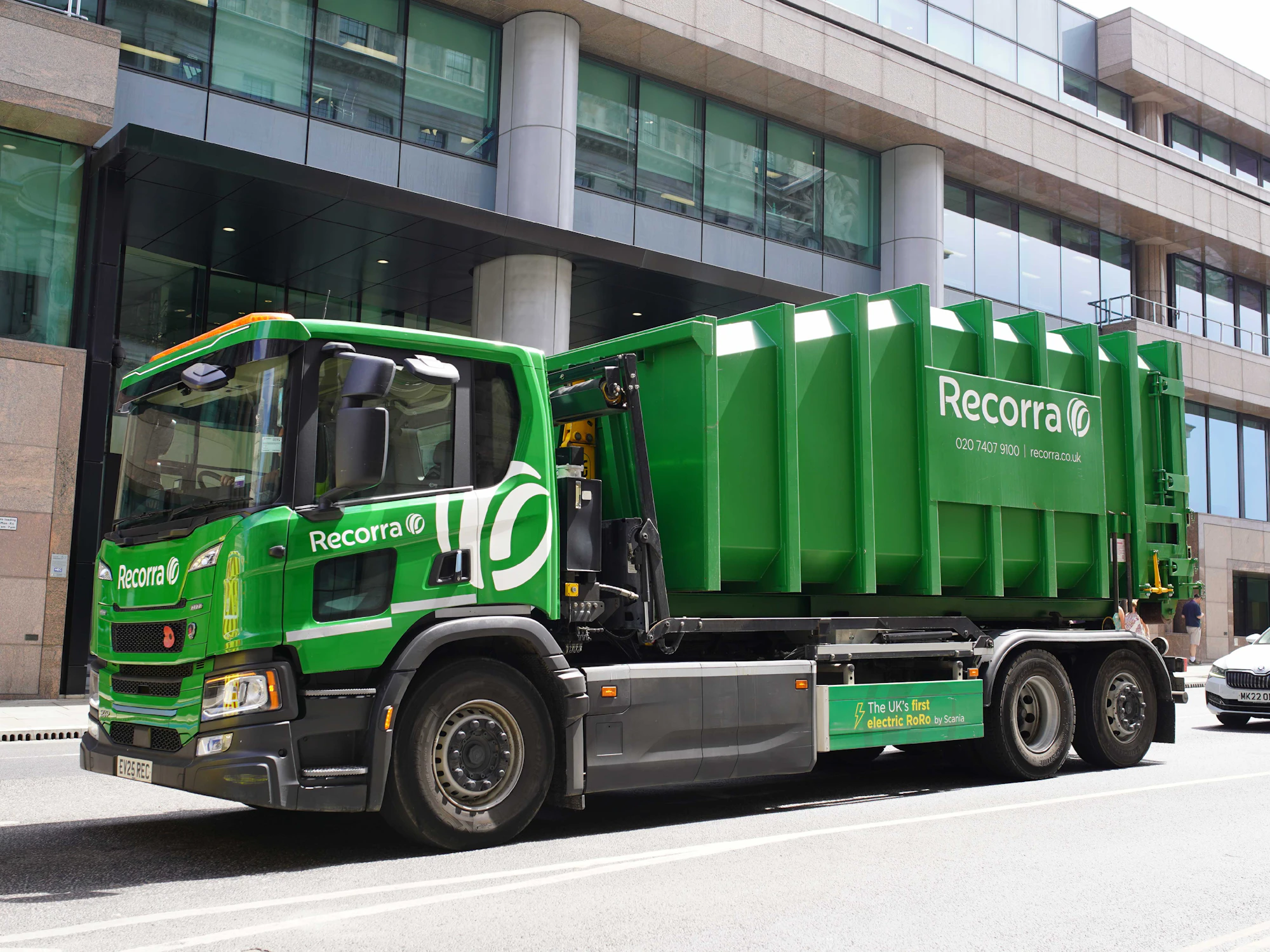
A critical first step was understanding the scale and nature of the problem. Guy’s and St Thomas’ worked with EMSOL to install two air-quality sensors: one reference sensor to monitor background pollution levels, and another to assess acute pollution spikes. These sensors were paired with video footage, allowing pollution spikes to be linked directly to individual vehicles and specific activities. The data revealed that spikes in NOx were often associated with waste compactor operations in the loading bay.
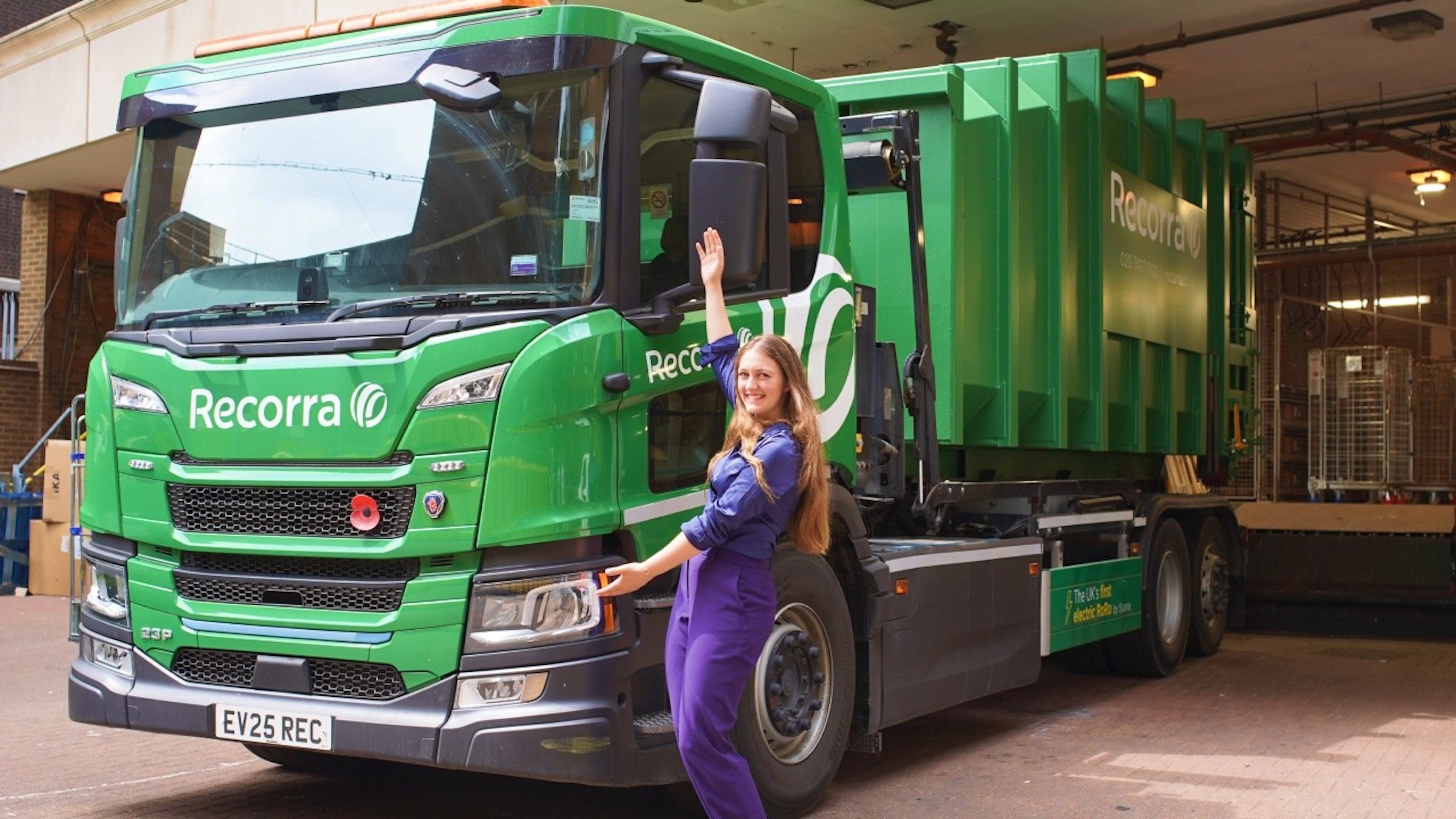
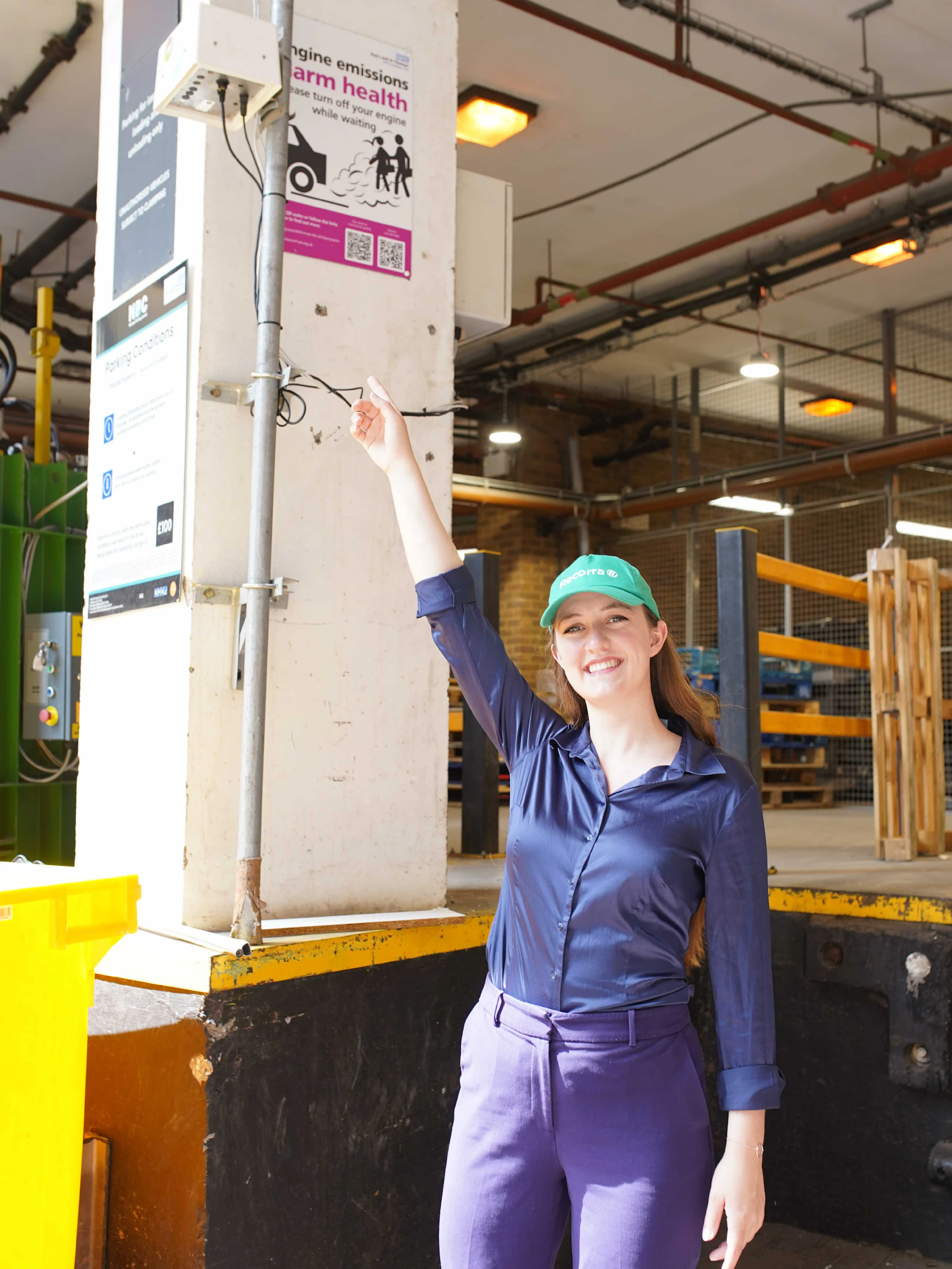
Recorra found two ways to tackle this: switching from diesel to HVO biofuel and introducing the UK’s first electric Roll On-Roll Off (eRoRo) vehicle by Scania.
HVO offers a significant reduction in carbon emissions compared to diesel and produces lower NOx emissions and particulate matter (PM) emissions, providing an immediate pathway to reduced emissions. Electric vehicles produce no tailpipe emissions at all.
What Impact Did These Changes Have?
Recorra and Guy’s and St Thomas’ compared air quality data from the six months prior to the HVO and electric vehicle switch (August 2024 to January 2025) with the six months following implementation (February to July 2025). The analysis examined both the frequency and intensity of pollution spikes, split by emission type, including NOx and PM.
The results suggested around a 25% reduction in the number of pollution spikes and a similar reduction in their severity in the Guy’s and St Thomas’ loading bay.
Comparisons with an anonymised supplier with a similar operational profile showed a reduction in both the number and severity of air pollution spikes associated with Recorra’s vehicles on site. The observed reduction in pollution also corresponds to studies showing NOx emissions from HVO are around 20% less than from diesel, drawing a correlation between the intervention of the fuel switch and the changes in the data.

How Can Other Organisations Reduce Air Pollution?
Many organisations can adopt low-carbon vehicles, and where electric vehicles are not yet viable, HVO provides an effective transitional solution that allows existing vehicles to be used to the end of their life, easing the financial costs of the sustainable transition. Air quality monitoring technology has also become more accessible, enabling organisations to conduct their own local studies and engage employees and communities in environmental action.
Recorra has already hosted an informational session with representatives from across the NHS network that shared learnings from this study and outlined a pathway to reductions in pollution spikes. By sharing these learnings, more organisations can move towards lower emission futures.
What’s Next?
Responsible vehicle choice is the first step to reducing both overall ambient air pollution and the prevalence of pollution spikes, benefiting everyone.
Looking ahead, Recorra aims to achieve a fully decarbonised fleet and zero direct emissions by 2040. With a continued commitment to monitoring, collaboration, and transparency, Recorra aims to bring the advantages of decarbonised vehicles to all clients, and cleaner air to our cities.
