The Future of Commercial Waste Collection: Staying Ahead of New Legislation
Learn how UK landfill tax reform, the Emissions Trading Scheme, and Deposit Return Scheme will impact commercial waste and how your business can stay ahead.
The UK Deposit Return Scheme (DRS), named Exchange for Change, is national legislation that is coming into effect in October 2027 and will affect the whole nation and require certain businesses to take part.
The scheme aims to encourage greater recycling of single-use plastic bottles and metal drinks cans by adding a refundable deposit to each container, which customers can reclaim when they return it.
Exchange for Change is the government-appointed organisation responsible for the roll out and operation of the scheme throughout 2026, 2027 and beyond. Details of the scheme are still being decided and worked through. Recorra has created this guide to help you understand the scheme and prepare you for how it may affect your organisation. This is based on the information currently released by Exchange for Change, and we will continue to update this page as new information becomes available.
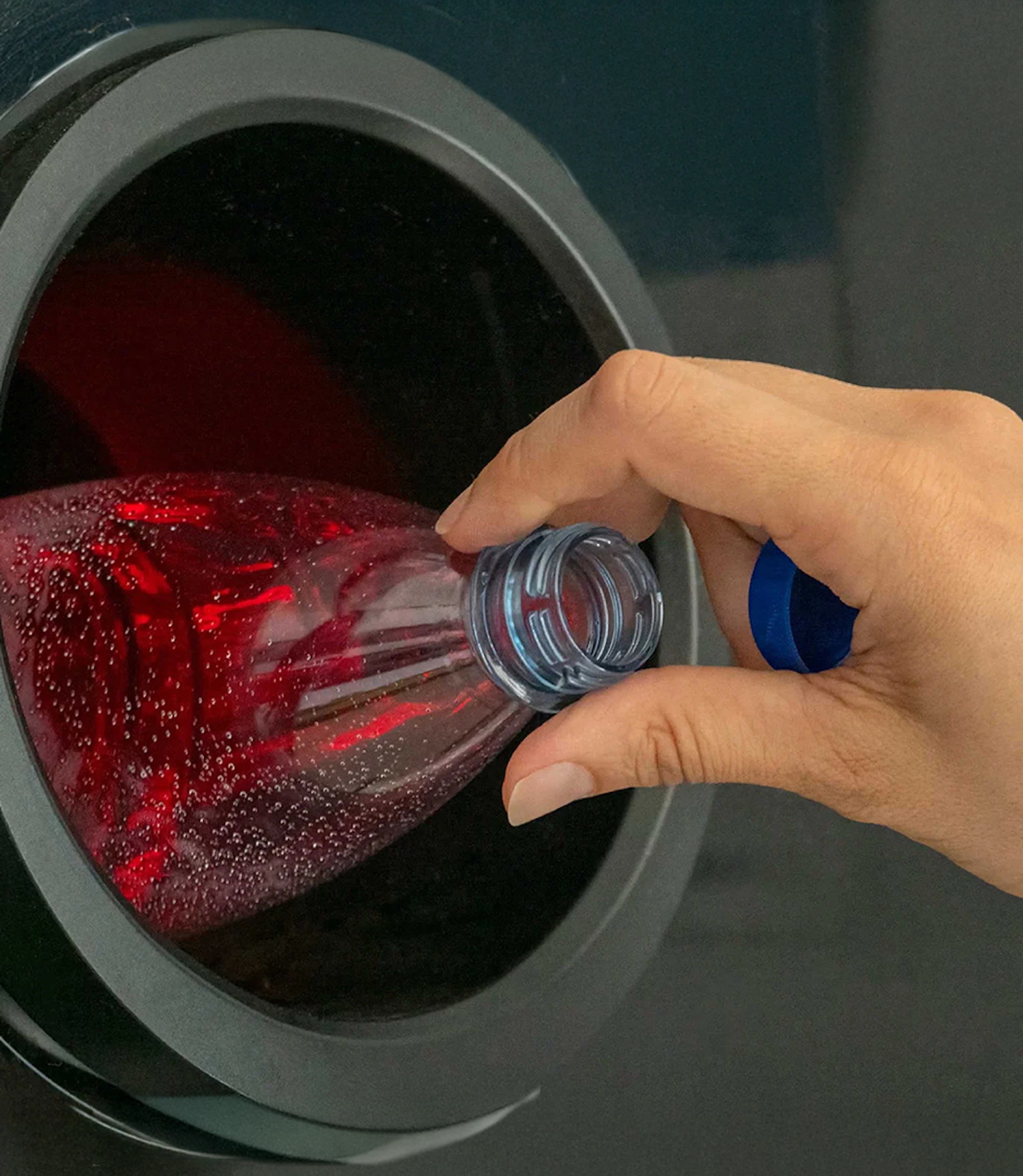
A Deposit Return Scheme (DRS) is a scheme that places a deposit on the purchase of a set of agreed items, which can later be reclaimed.
In the UK’s scheme, single‑use plastic bottles and aluminium or steel cans, between 150ml and 3L in volume, will have a 20p refundable deposit placed on them at the point of purchase. Customers can reclaim the deposit by returning the empty container to a designated return point, typically over the counter at a participating retailer or a reverse vending machine.
The legislation was brought in to encourage greater capture of on-the-go drinks containers. This is to:
Exchange for Change aim to achieve target return rates of 90 per cent of containers within three years.
Pay a Deposit
A refundable deposit is added when you buy an eligible drinks container.
Return Your Container
Return the empty container to a participating return point to claim your deposit back.
Collected & Recycled
Returned containers are collected, sorted and recycled into new products.
If you are a physical retailer or hospitality venue providing in-scope drinks then the DRS may apply to you. If you are a campus or venue that houses these sellers, the DRS will affect you.
If you are a physical retailer or hospitality venue providing in-scope drinks then the DRS may apply to you. If you are a campus, estate or venue that houses these sellers, the DRS will affect you.


Physical retailers over 100m² in floorspace must provide a return point and 20p refund, unless exempt.


Hospitality businesses pay a 20p deposit on eligible drinks containers but can choose not to charge customers if containers stay on-site, and they are not required to operate a return point.

Campuses and venues are not required to provide return points, but many choose to support on-site retailers and hospitality businesses by offering convenient shared return locations that improve the customer experience and reduce disruption.

Obligated or voluntary businesses can offer return points either through manual or automated return processes. The approach chosen will depend on operational requirements, but both methods support accurate tracking, efficient refund management and compliance with Exchange for Change standards.
Under the DRS, staff at participating locations accept eligible containers over the counter and provide customers with their refunds. Each return is carefully recorded using Exchange for Change-specified point-of-sale systems, ensuring accurate tracking of deposits and returns. This process helps maintain transparency, supports compliance with the scheme’s regulations, and allows businesses to manage refunds efficiently.
Automated returns under the DRS use Reverse Vending Machines (RVMs) that scan and collect containers and issue refunds automatically. RVMs will be central to the system, offering a quick, convenient return method. Machines meeting Exchange for Change specifications will record all returns in their digital system, ensuring accurate tracking and efficient operations for businesses and consumers.
The Deposit Return Scheme is set to launch on 1ˢᵗ October 2027 in England, Northern Ireland, and probably Wales. Scotland is adjusting its schedule so the rollout happens across the UK at the same time.
The Deposit Return Scheme will cover all single-use PET plastic bottles and metal cans used for drinks ranging from 150 ml to 3 L, allowing consumers to return them and claim a deposit refund.
Whenever your return point accepts containers and refunds customers the deposit amount, the DMO reimburses you for the discrepancy if you have provided more refunded deposits than you have sold. It will also pay a handling fee to cover your operational costs (yet to be confirmed).
Handling fees are designed to offset expenses such as staffing, storage space, machine operation, administration and reporting.
This ensures businesses are not financially worse off for running a return point.
Return Handling Fees (RHF) are the mechanism that funds the take-back infrastructure in DRS, paying retailers a small amount per returned container to offset the real cost of operating return points.
The confirmed RHF will operate on a tiered basis, depending on how containers are collected.
The tiered approach recognises that operational costs vary depending on the scale and type of retailer, ensuring the scheme remains balanced and fair across different business models.
Exchange for Change intends to support smaller businesses with a targeted grant scheme to help smaller retailers invest in RVMs when they are the most appropriate solution. The proposed grant level is £6,000 per site, to be paid in annual instalments of £2,000 for three years, starting three months after implementation. Exchange for Change has set aside £60m to fund these grants over the first three years of scheme operation. Contact Exchange for Change for more details and to apply.
Exchange for Change wants to provide further support for smaller, independent retailers.
Retailers with a sales area of 100m² are automatically exempt from the scheme, however, now retailers between 100m2 and 199m² in urban settings and rural retailers with a sales area of less than 200m² can apply for a size-based exemption.
Further exemption allowances have also been agreed based on proximity, heritage or listed building restrictions, site access, lack of access to utilities, or where there are already sufficient return points nearby. Exchange for Change will be responsible for assessing and approving these applications.
Learn how UK landfill tax reform, the Emissions Trading Scheme, and Deposit Return Scheme will impact commercial waste and how your business can stay ahead.

What are the changes to waste legislation 2024? What are the new regulations under simpler recycling? Do you legally have to recycle in the UK? What is the UK policy on waste? What is the UK legislation for food waste?

How Recorra helps businesses stay compliant and reduce food waste
